All cases

Beautifully Unreal – The Theatrical Twist on Zara Larsson's Midnight Sun Tour

About

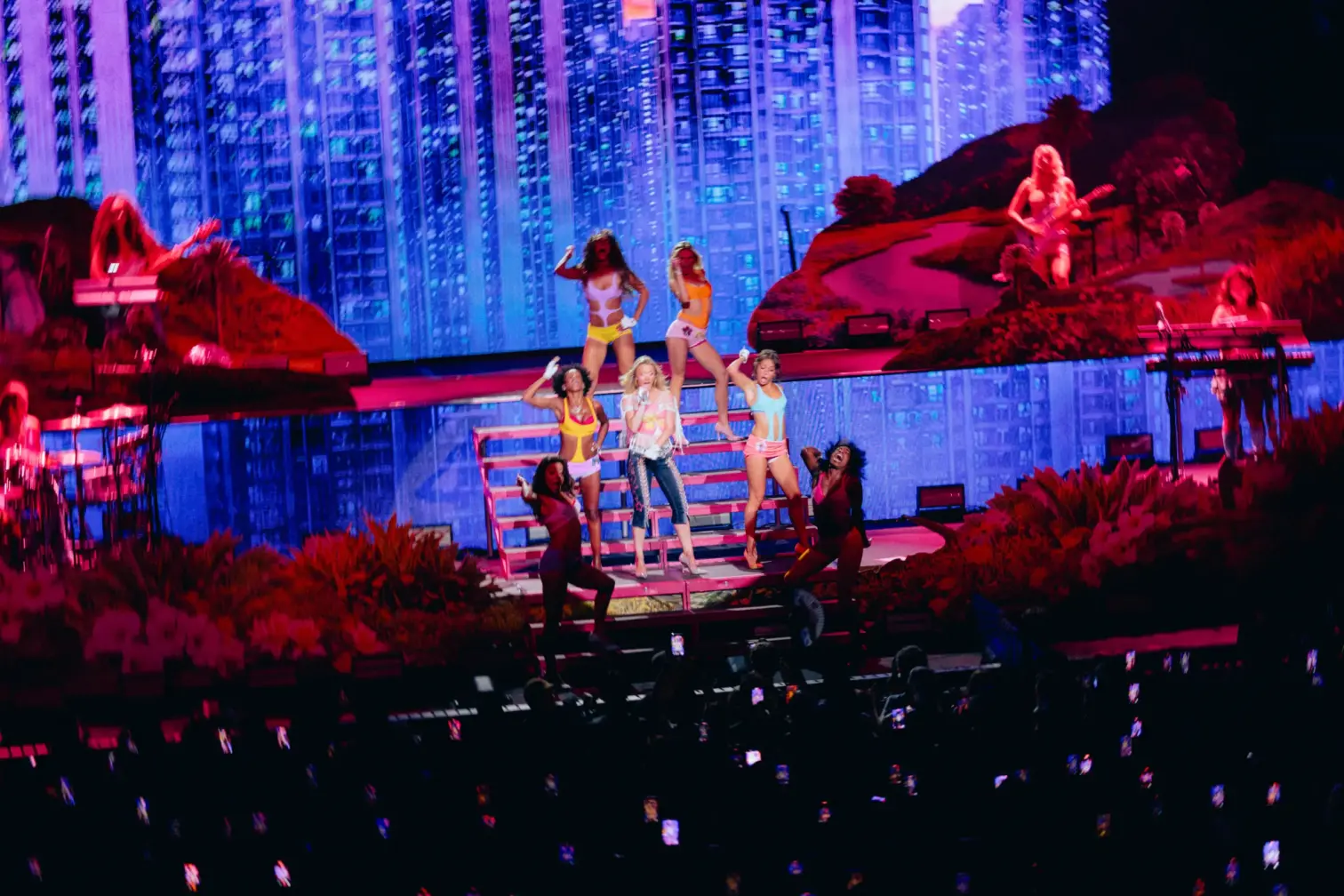
For Zara Larsson's Midnight Sun Tour, scenographer Liam Moore drew on the traditions of theatre to bring her vibrant digital universe into the physical world. The result is a playful stage world where theatrical illusion meets traditional craftsmanship.

Zara Larsson's world was already bursting with color long before the Midnight Sun Tour reached the stage. Across music videos and digital imagery, she had built a vibrant, fantastical universe. But translating that world into a live performance – one that audiences could experience from every angle – called for a different kind of creative thinking.

For scenographer Liam Moore, the answer lay somewhere unexpected: in the traditions of theatre. Drawing inspiration from painted backdrops and two-dimensional scenery, he began imagining how Zara's digital world could become something physical.

Beyond the camera's frame

Liam was no stranger to creating visual worlds. Having worked with artists including Adele and Billie Eilish on music videos and photography, he knew how to build an environment around an artist's identity. But creating a touring stage was something different.

In a music video, he explains, you have control over what the camera sees. You can carefully compose each frame, even use illusions to conceal what lies beyond it. A live performance doesn't offer that same control.

"For an audience, you have to kind of think about the bigger picture," he says.

The scenery had to work from different points of view. Liam was also interested in creating moments of surprise throughout the performance – unexpected elements that could bring a new sense of excitement to the show.

The Midnight Sun Tour would travel between venues of very different sizes, with performances taking place in both daylight and darkness. Whatever the setting, he wanted to create an immersive world for Zara, her dancers and her band – one they could inhabit, rather than simply stand in front of.

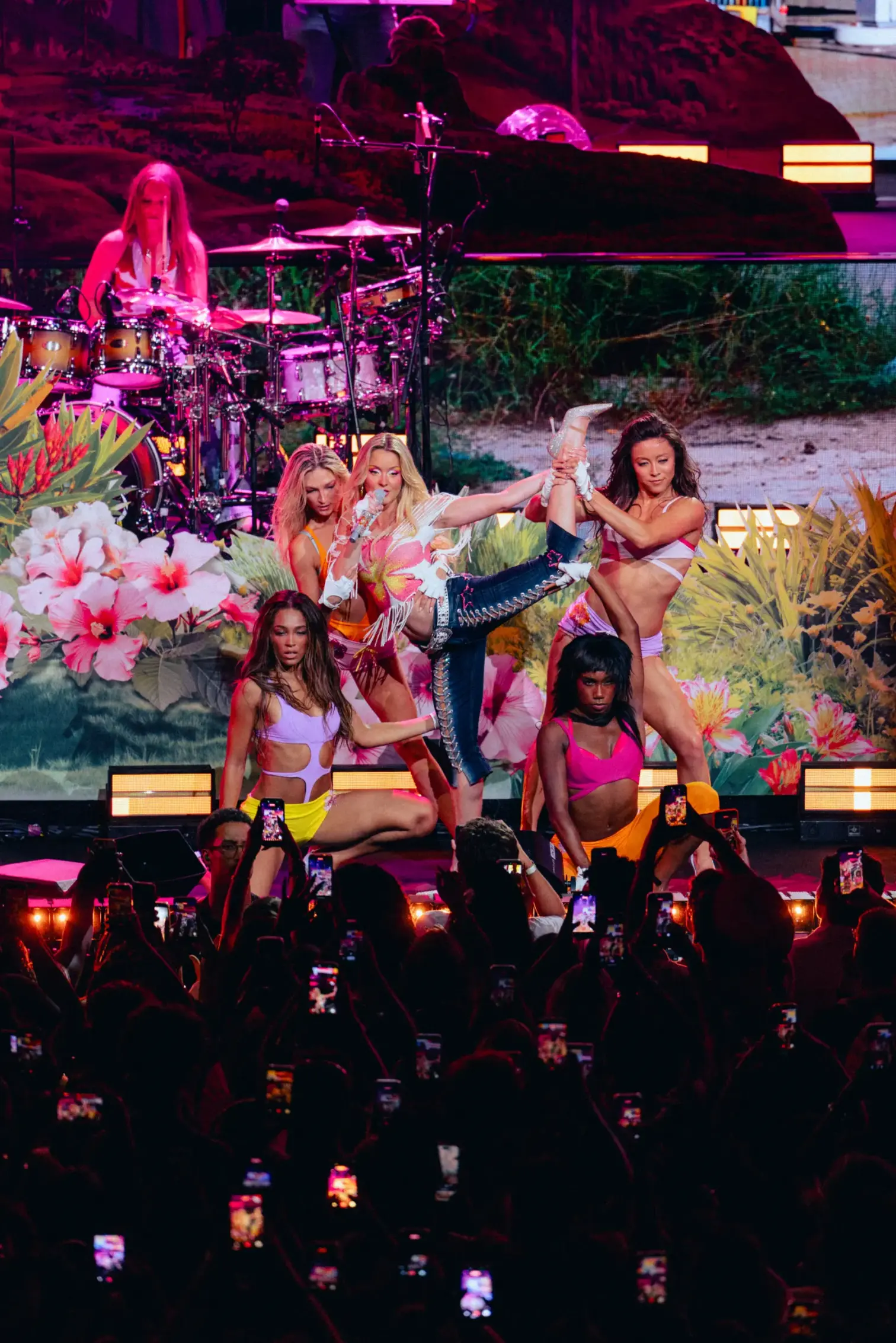
His solution drew on a long tradition of theatrical scenery: two-dimensional cut-outs, arranged in layers to create the impression of a much larger world. It was an approach that could travel from stage to stage without losing the visual richness of Zara's imagery.

But there was another, less obvious reason why this traditional technique felt so right for a contemporary pop show.

Photo credit: Robin Bøe

A shared theatrical language

With the creative direction established, Liam needed a production partner who could help bring it into the physical world. Rehearsals were taking place in Stockholm, and with Zara being a Swedish artist, he liked the idea of working with a local studio.

His search began online, and Big Image's work in theatre caught his attention. Here was a studio familiar with the kind of visual storytelling he was drawn to – where scenery could create an entire world through imagery and illusion.

Liam visited Big Image's Stockholm studio twice during the project. Whenever possible, he prefers to work directly with the people bringing his ideas to life. Being in the same room makes it easier to explore possibilities together, and some things – particularly the qualities of physical materials – are best experienced firsthand.

During his visits, Liam was impressed by the range of possibilities under one roof. While printing and fabrication are often handled by different suppliers, at Big Image he found a studio where artwork development and physical production could be part of the same process.

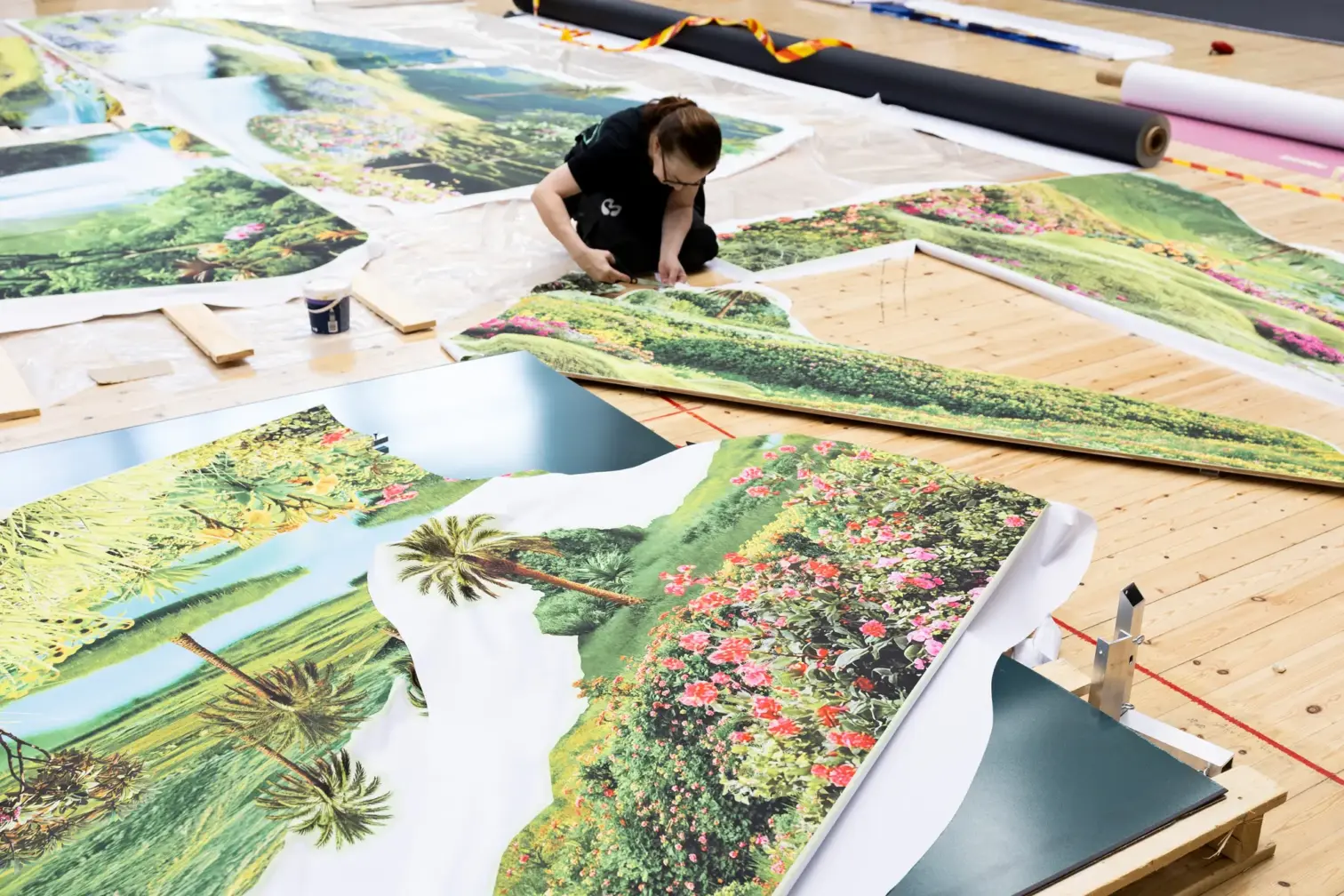
Working from the extensive visual references Liam provided, Big Image's artwork team developed the imagery for the scenic elements using AI-assisted image creation and traditional retouching techniques. Through an ongoing exchange with Liam, the images evolved until they captured the distinctive visual character he had envisioned.

And for this particular stage, the material choices mattered enormously. He wanted the physical scenery to have the same richness and intensity as the digital imagery behind it. The colors needed to be deeply saturated, but the surfaces had to remain matte, without the artificial sheen that could undermine the theatrical illusion.

The outlines of the cut-outs were equally important. Although deliberately two-dimensional, each scenic element needed intricate contours that would give it its own character.

At the studio, these artistic considerations guided the conversations and tests. Together with the Big Image team, Liam explored materials and examined print samples, finding ways to preserve the qualities he wanted as the designs moved into production.

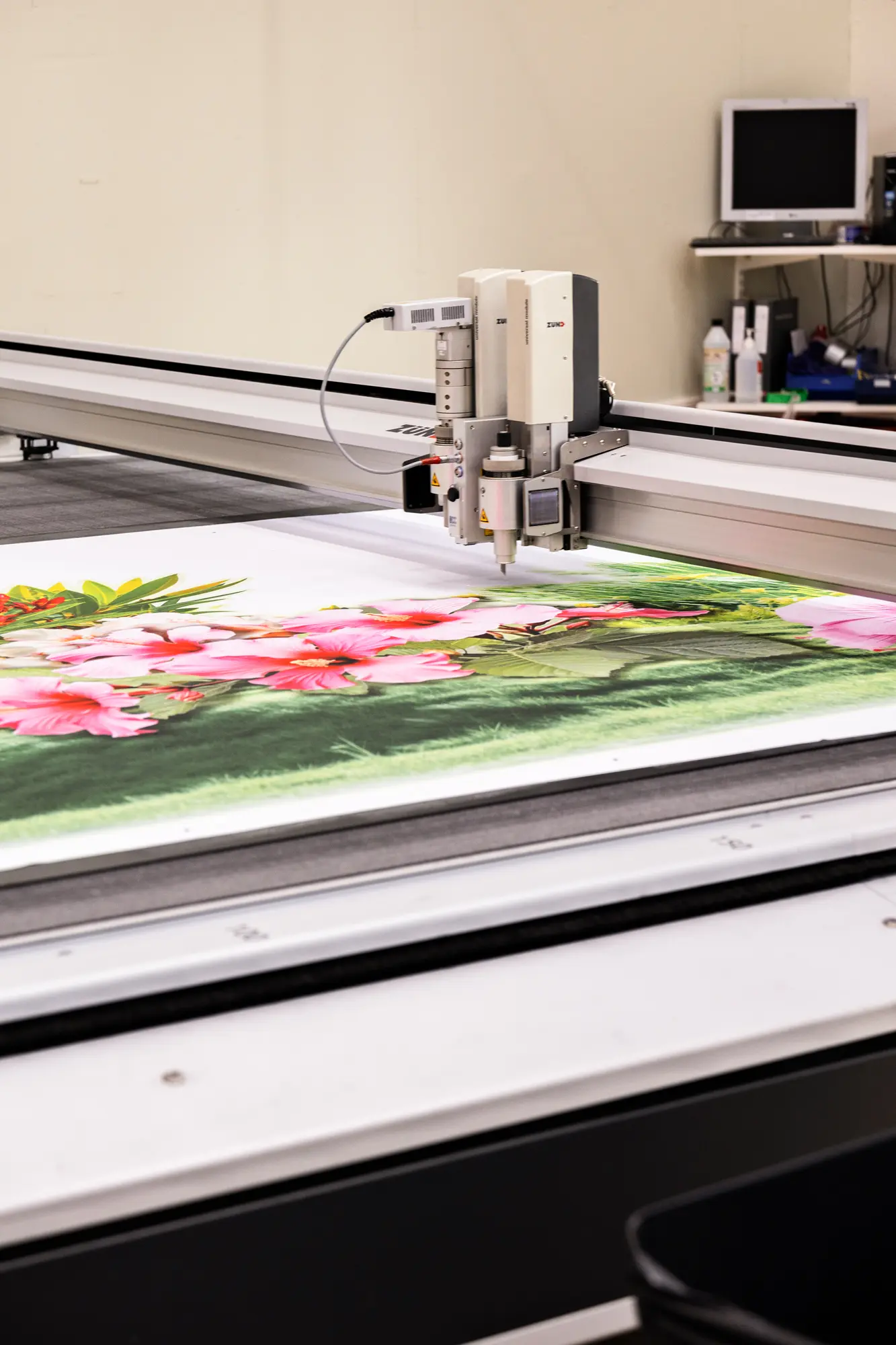
The resulting scenery combined shaped panels with imagery premium printed on fabric, carefully cut to follow the contours of his designs. Some of the finer details were finished by hand – a touch of traditional craftsmanship in a stage world inspired by digital imagery.
A little theatrical mischief

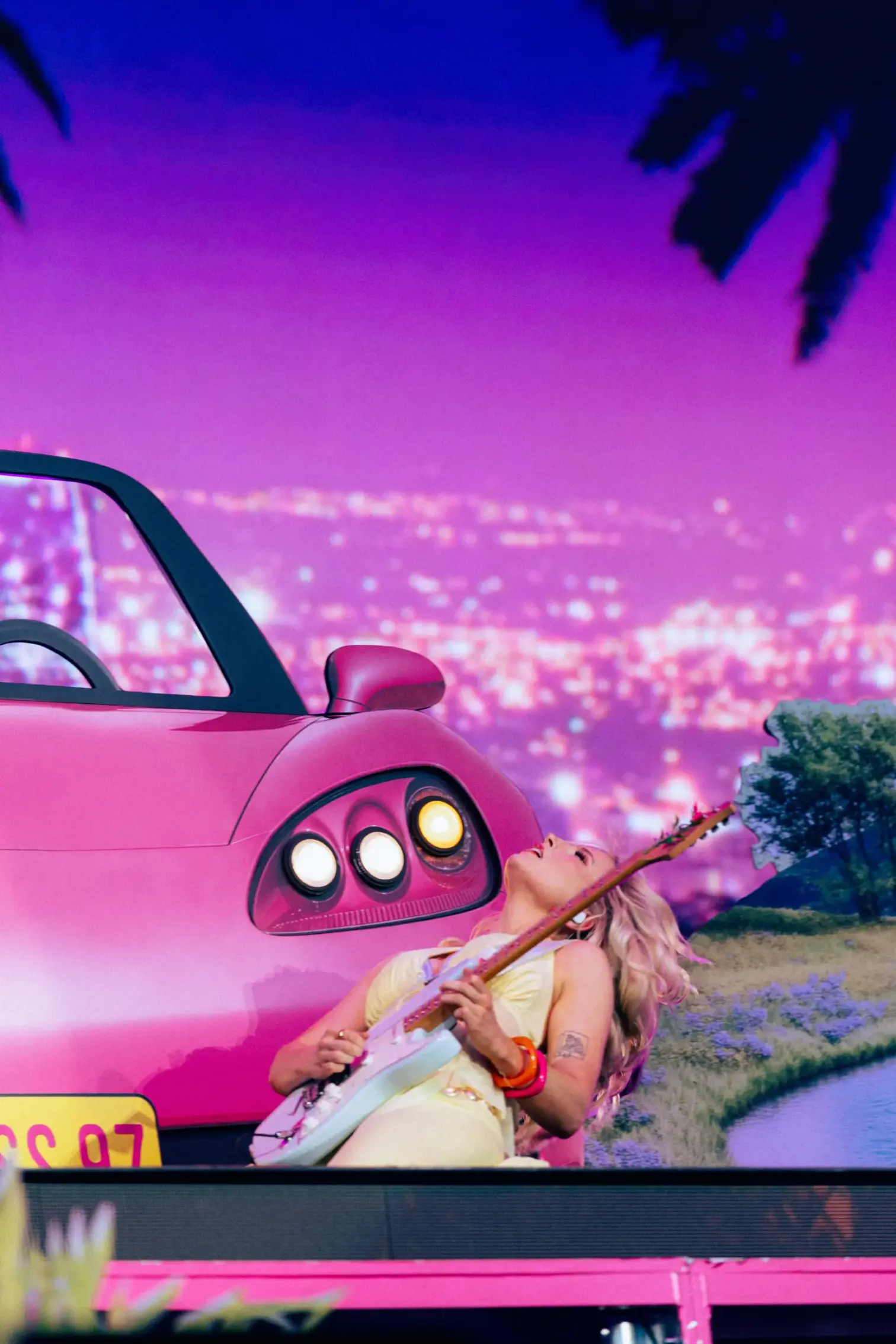
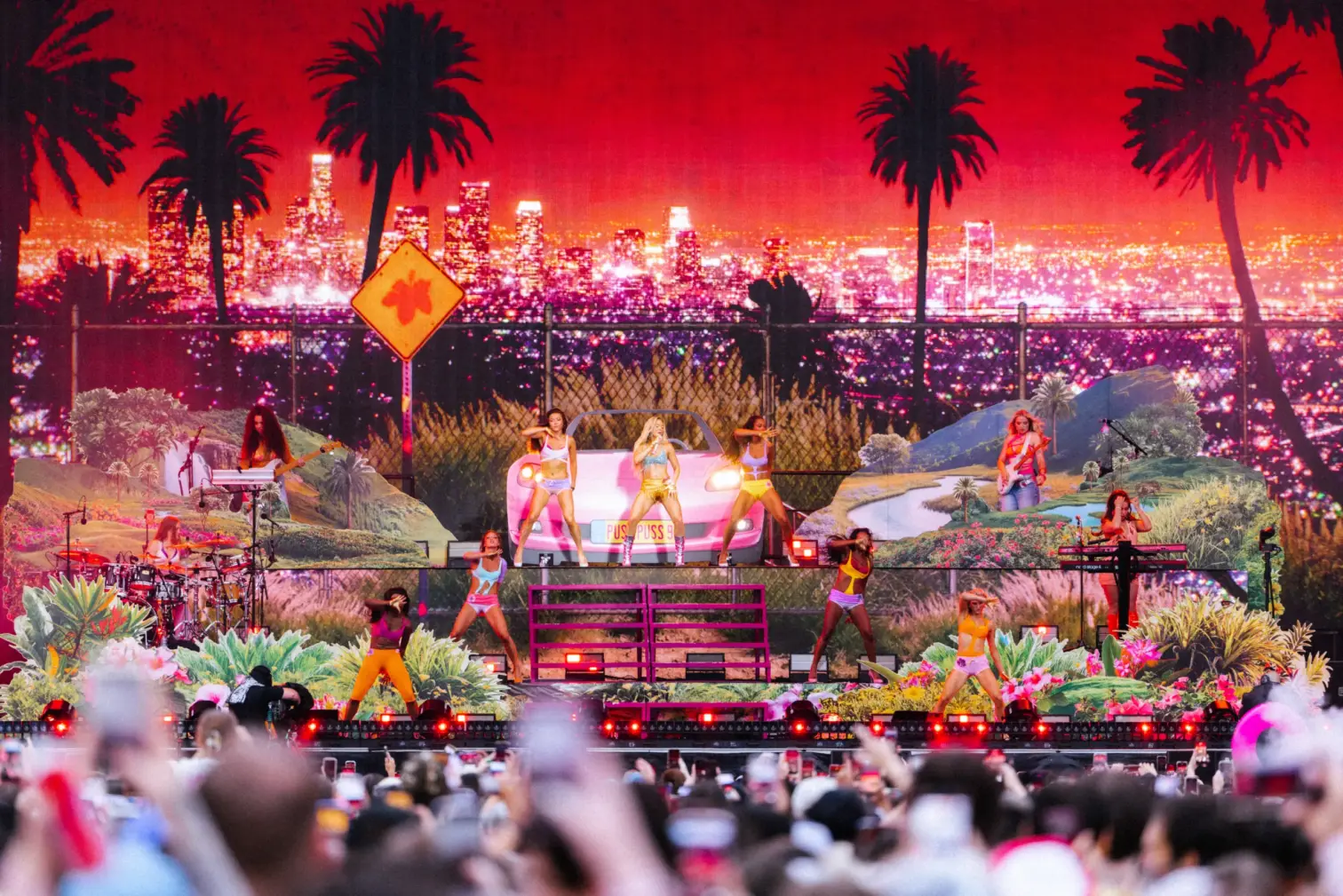
And then, in the middle of Zara's fantastical stage world, a bright pink car rolls into view.

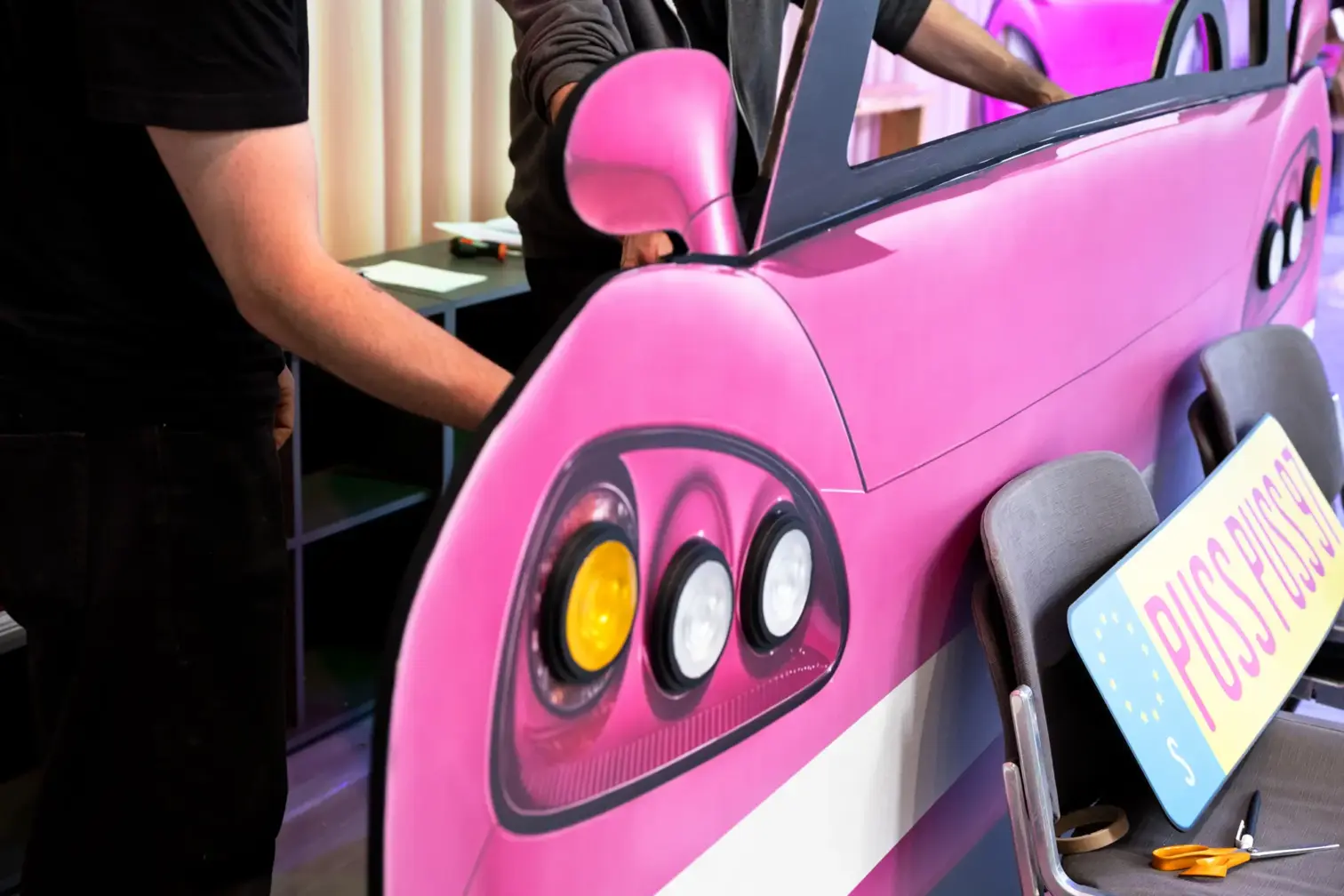
It has all the details of a real car, right down to its functioning lights. Except, of course, that it's completely flat.

For Liam, that was precisely the point. The car embraced the same playful theatrical language as the rest of the scenery, but with an unexpected twist.

Made from lightweight fiberboard with printed and carefully cut details, the car also featured hand-painted sides. It was mounted on an aluminum structure that allowed it to roll onto the stage at just the right moment. Big Image's LED team developed the lights, which needed to be bright enough to reach the audience and respond to the show's lighting cues – something Liam hadn't been entirely sure would be possible.

Seeing the finished car light up for the first time was a particularly satisfying moment.

"It was like exactly what I had in my head," he recalls.

What Liam had imagined as something fun and a little cheeky turned out to be an audience favourite. As soon as the car appeared on stage, phones came out and people were smiling.

When told that someone had been disappointed to discover the car wasn't real, Liam found the reaction hilarious.

"The whole point is that it's a fake car."

Photo credit: Robin Bøe

Seeing the bigger picture

It wasn't until the scenery was assembled in the rehearsal space that Liam could see the full world he'd imagined. Drawings and digital mock-ups had brought him this far, but standing in front of the finished scenery was something different. Only now could he fully appreciate its scale.

He remembers the satisfaction of seeing the dancers encounter the finished scenery for the first time. And Zara's reaction made the moment even more special.

"She was just so thrilled and so, so excited by everything," he recalls.

For Liam, the Midnight Sun Tour marked his first major touring stage production. After years of creating visual worlds for music artists, he had discovered a different way of bringing those worlds to an audience.

And the experience has left him eager for more.

"It just makes me want to do more, honestly."

Photo credit: Robin Bøe

Let’s make your idea real

From bold ideas to finished reality, we make the extraordinary possible.